How many students throughout history have endured a classroom discussion bored out of their minds? We often think of learning as something we have to do in order to graduate and get a job, like it is a required chore–something we have to do before doing something fun. This will not do! We need to reconsider why we learn. Everything we do everyday, from the mundane to the exhilarating, is a form of learning because it taps into the human experience. What matters is how we approach it and what we get out of it.
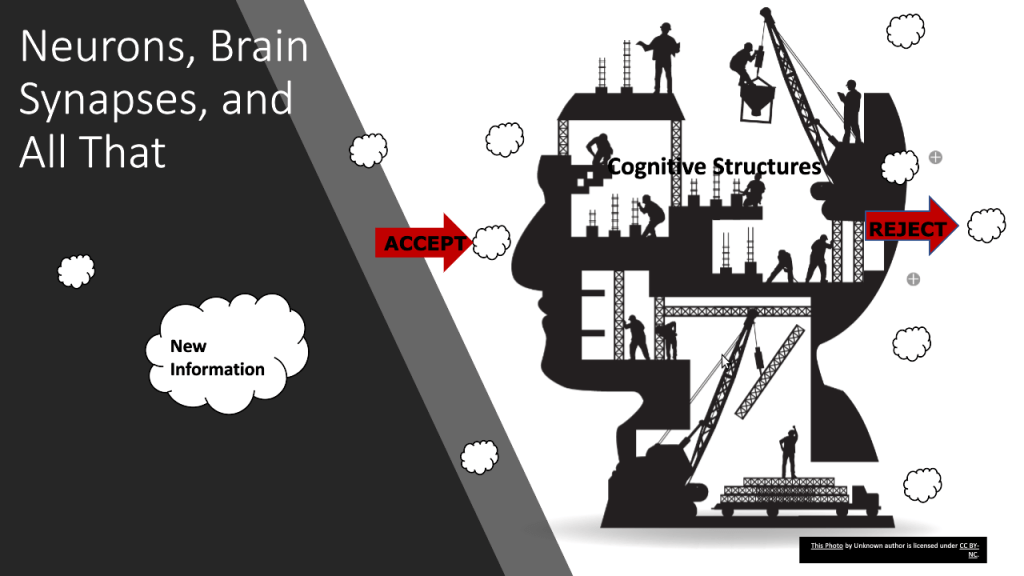
Cognitive Structures–Before discussing how learning can be fun, it’s important to understand how the brain takes in new information. Charles Letteri, the Director for Cognitive Studies at the University of Vermont in 1985, asserts that from birth, our brains build cognitive structures–connected bits of well established information. These cognitive structures help us to connect new ideas and make applications to a wider world view. Every time we learn something new, our brain decides to keep it or toss it. In order to keep it, the brain has to find a place for it with a connection to other information in the cognitive structure. If there is no structure (or even it is it unorganized or not well connected) information is miscategorized or rejected. Before any long term memory can take place, cognitive structures must be in place or “new information will be lost, rejected, translated incorrectly, or placed incorrectly in the cognitive structure” (Letteri 115).
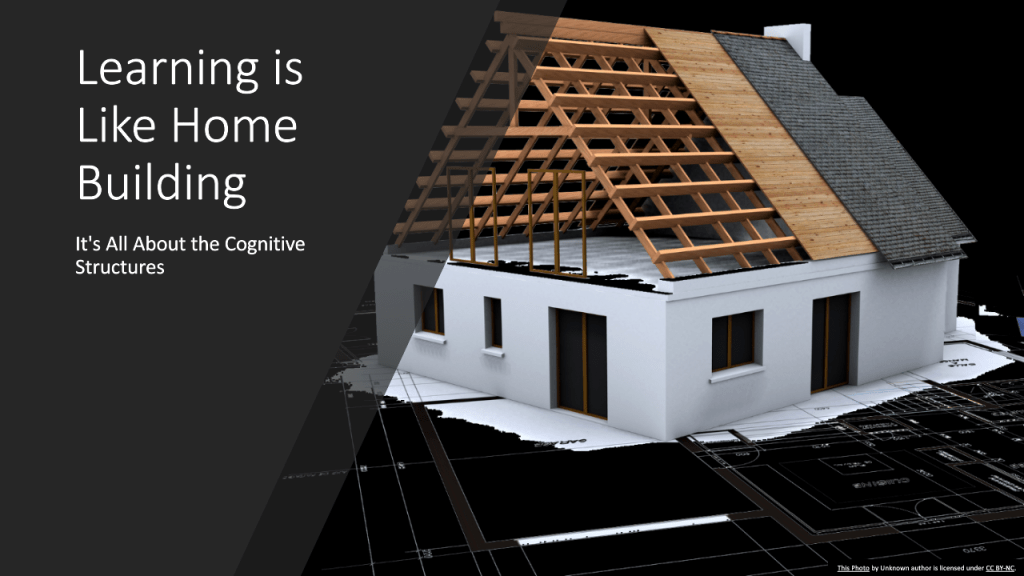
Learning is like building a home. Think of cognitive structures and connections as building a house. The foundation must be poured, the two by fours and the walls must be in place, and the roof on before furniture can be brought in. When new information is brought into our brains, it is categorized according to its connection to the cognitive structure. Just as a toilet in the living room would not be suitable, ideas placed in the brain with no connection to a reasonable cognitive structure will result in vague learning and recall. This means that a bored child staring out the window in a math class is potentially rejecting structurally fundamental information that would broaden his understanding of other topics later in life. It is vital to learning to stay alert and engaged with the topic! In order for something to make sense in our brain, it must be organized to an already existing structure. Staying engaged in learning is a process that eludes too many of us. How we get all that information built into our brain?
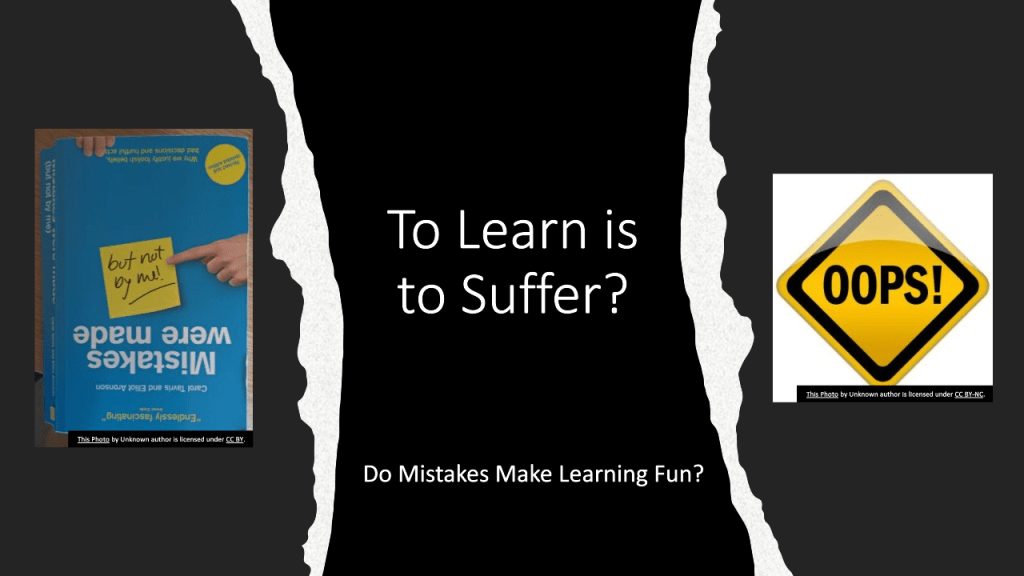
To learn is to suffer? According to Jordan Peterson, a clinical psychologist and professor at the University of Toronto, we’ve been programed to believe that when we make a mistake, we’re going to suffer, so we go to great lengths to avoid making mistakes. The problem is, making mistakes is part of learning! If we resist the mistakes, we won’t learn. Peterson explained that the rate of learning is important. “If you get the rate just right,” he said, “You’re just opening up enough novelty so you can benefit from the possibilities . . . without being overwhelmed by the unexpected element of it. . .” (Full video here)
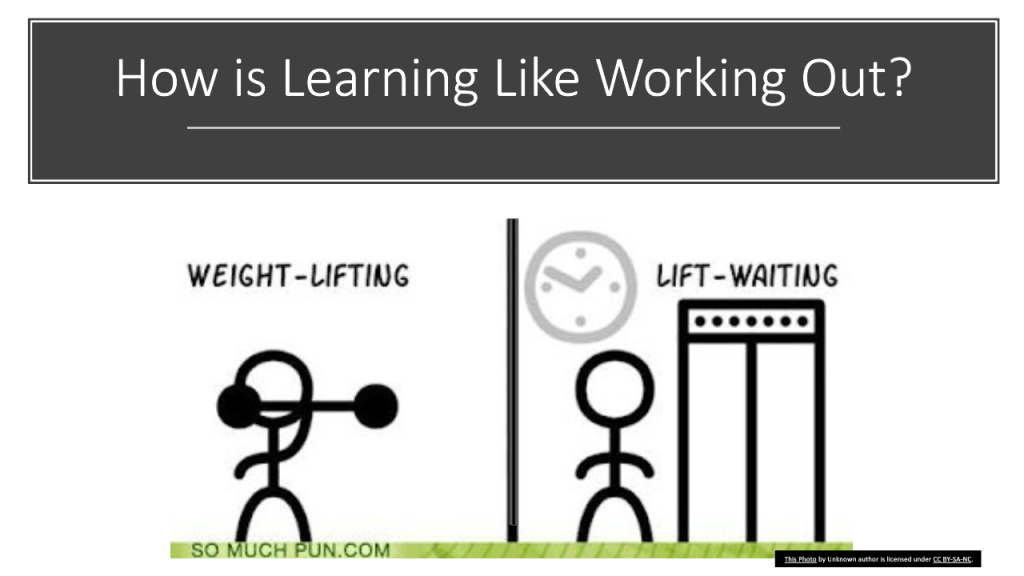
How is learning like working out? When we learn, we must break down the old ways of thinking to make room for the new ways. When things break down, even on the molecular level, it causes us pain no matter how it happens. We are conscious of the pain of a large scale molecular break down but not small, deliberate construction. In fact, according to Dr. Peterson, these small scale reconstructions are not only good, they are necessary. If neurons are not breaking down and re-creating, they are stagnant, or static. No organism likes to be static (not moving). But if there is too much breaking down and re-creating, it is disorganized –it is chaotic–which we also don’t like. Think of learning like working out. Lifting weights causes minor tears in the muscles. When the body repairs them, they build back stronger. If we work out properly, there is minimal pain, but if we go too hard, too soon, we have sore muscles! Cognitive restructuring is the same. The brain is more likely to accept information when we are attuned to our senses. A steady diet of new information from the senses allows the brain to create cognitive structures, reconstruct inefficient connections, and strengthen logic.
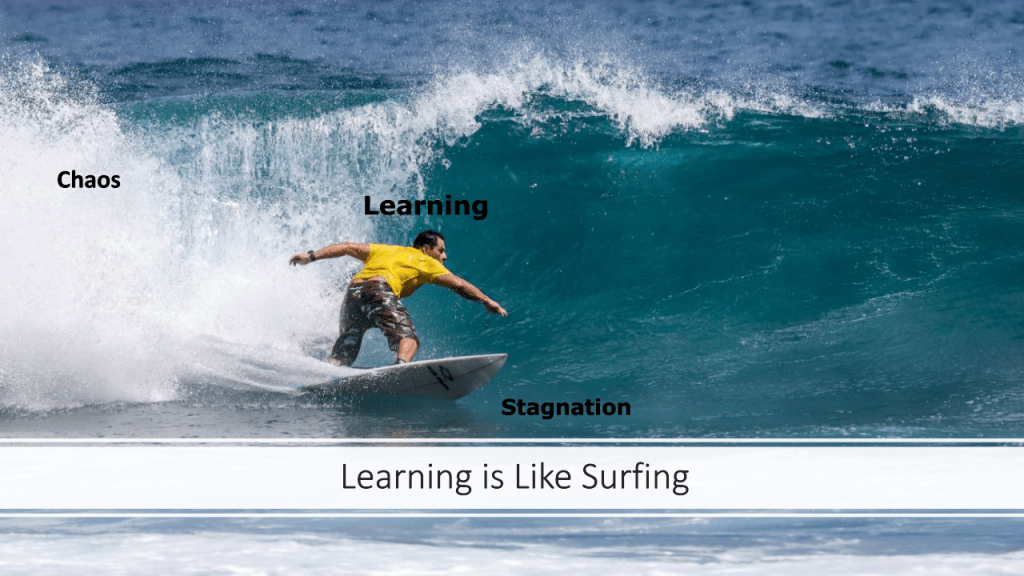
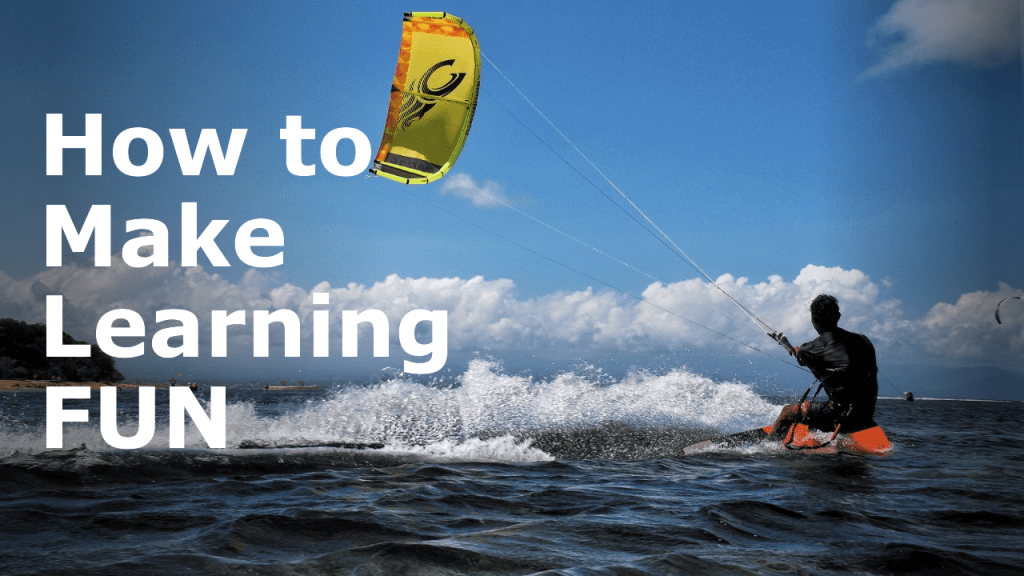
Learning is like surfing. You can feel when your learning is static. You may feel depressed or anxious, unfulfilled, antsy, or dissatisfied with life. These are all signs, Peterson says, that we feel static, or stagnant in life. When you are in chaos you may feel stressed or overwhelmed, you may lose sleep, or you may get sick as your immune system weakens. These are signs that we are in chaos. Peterson contends that whether consciously or not, we are always looking for the balance between static and chaos, life and death, knowledge and ignorance. Dr. Peterson compared this to surfing. Surfers are always trying to find the sweet spot on the wave between chaos ans static. We can also feel when we have found the balance in learning. We feel like things are going well. We feel happy and accomplished, yet still challenged. We feel gratified and interested in what we are doing and learning. We can feel the cognitive connections building and strengthening. We try to stay in that state, sometimes trying and failing multiple times as learning progresses, but we don’t feel we are suffering. We feel we are learning. It is exhilarating, and it is FUN!
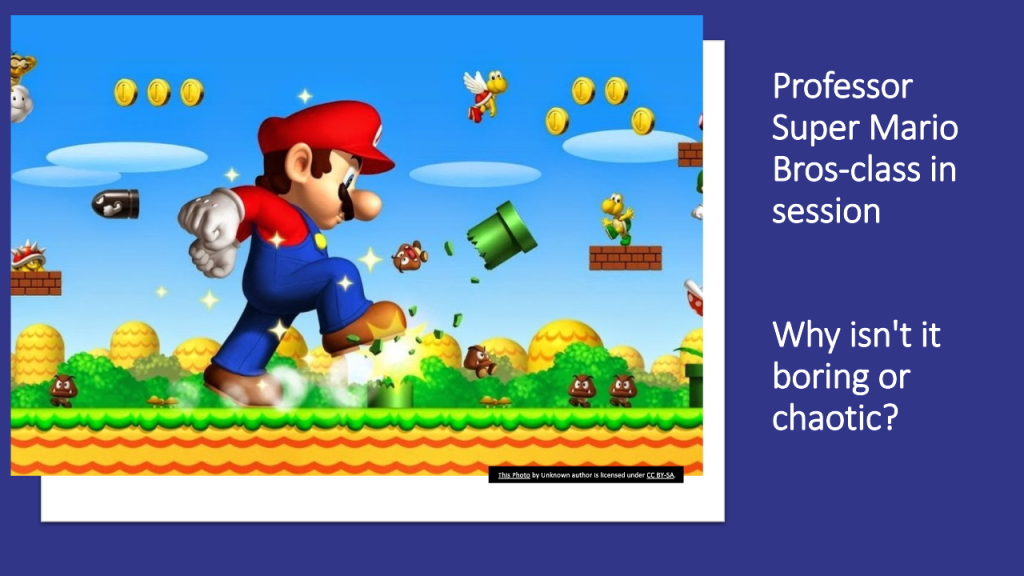
Learning is like a video game. Another example is a video game. Developers must find the balance between too easy and too difficult. Too easy, and it is boring. Too hard, and we won’t engage with it for long. Usually we are given multiple lives and multiple chances to mess up and try again. We progress a little farther every time, and once a difficult passage is conquered, we are able to get through is quicker the next time because our brain has established those cognitive connections. Once the game is completely understood, and it is no longer a challenge, then it becomes static (boring) and we go in search of another challenge. This is learning! It wasn’t painful, it was a challenge! We like to be challenged!
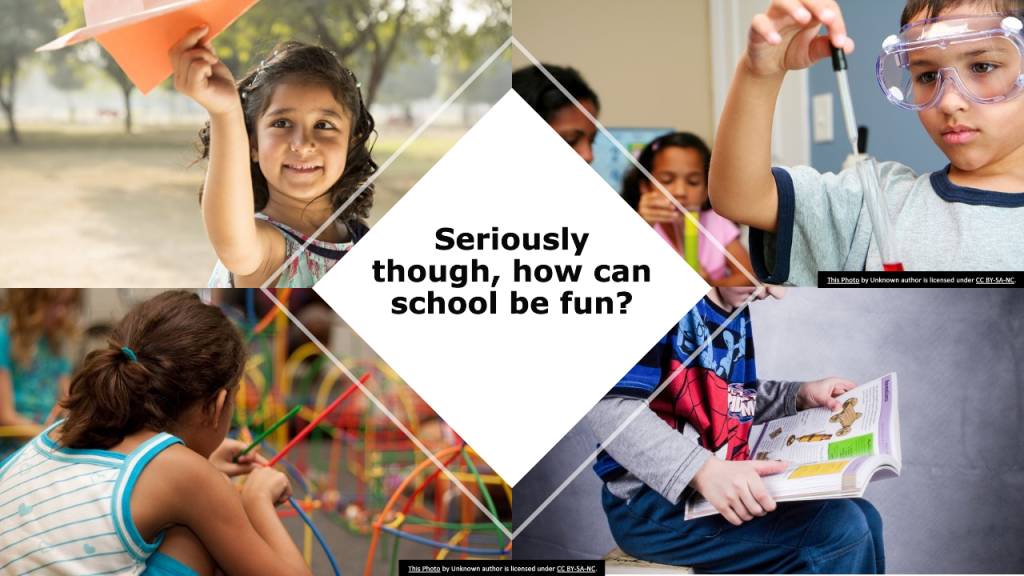
Seriously though, how can school be fun? Every topic relates to earth life and human experience. Tap into the core subjects of learning what it means to be human and it will be engaging and interesting. We are interested in our own history. It just needs to be presented in a way that cognitive structures don’t reject. If the topic is not presented to your liking in the textbook or in a class, choose to approach it in a more engaging way. There are infinite ways to learn and study. For example, I like to draw a silly cartoon picture to help me understand the subject. I am not an artist! But the picture helps connect the new information to a cognitive structure I’m already familiar with. Finding way to connect information to cognitive structures will make learning more engaging. Teaching another person what I learned is also helpful. Don’t be afraid to make mistakes! See obstacles as challenges instead. (You’re trying to defeat the bad guy, remember? You’re trying to ride that wave. You’re trying to build that house. It’s a challenge. Challenges are fun!)
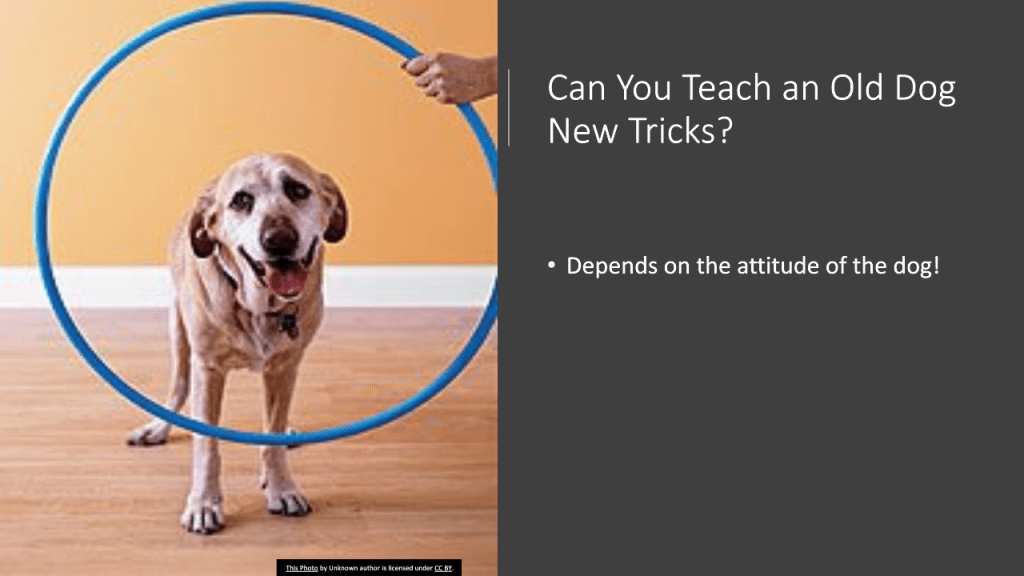
Can you teach an old dog new tricks? Peterson said that we have been programmed to believe that mistakes are bad because they make us suffer. In order to love learning, we have to rethink our reactions to making mistakes. Is it possible to reprogram that impulse to avoid mistakes? Yes! Instead of thinking about homework or work as something you must focus on before doing something fun, frame it within the context of pushing the boundary between static and chaos. The attitude we approach tasks with have huge influence over what we get out of it. Just being aware of it is a good first step forward. Next time you are tempted to groan over an assignment, just imagine you are surfing!
The Fun Theory. Here is a good example of what we are talking about. Volkswagen conducted an experiment in Sweden to see if people would do something out of their norm if it was fun. The results showed that 60% more people used the stairs than normal. Why? Because we are naturally curious and want to engage in the challenge and novelty of learning and experiencing something new. We just have to tap into that natural curiosity and learning is inevitable!
Learning is empowering! Accomplishment is empowering. Think about when you did finally pass that hard level, or figured out how to do the flip on the trampoline, or rode your bike for the first time without training wheels. The feeling was exhilarating! The process of learning all those fun things is the same with ALL kinds of learning. If you learn to apply it to everything, you will learn to love learning.
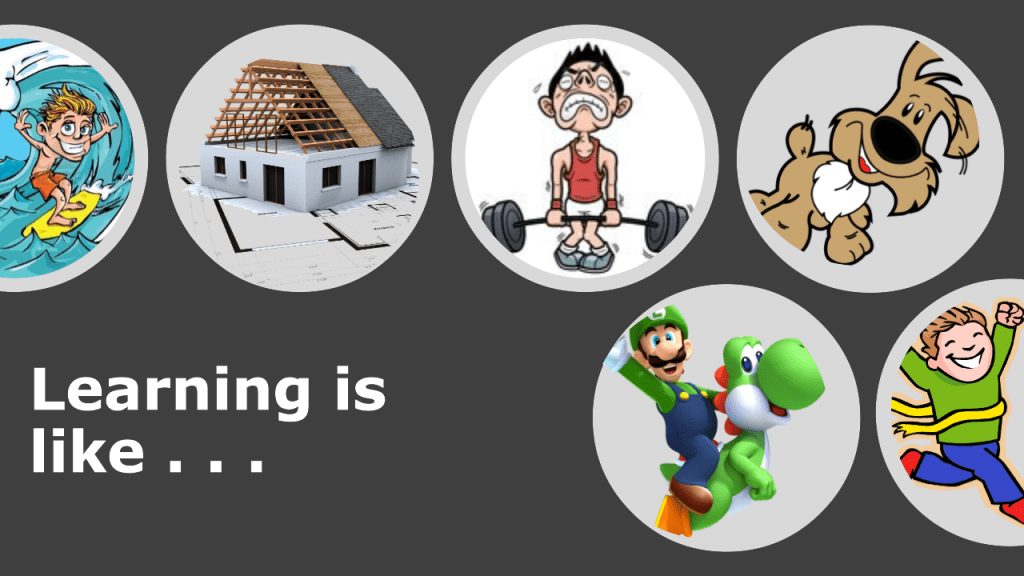
Let’s review! Learning is like building a house. You have to have a structure for incoming information to connect to. Learning is like working out–minor changes cause minor pain. Neurons tear down and build back stronger. It is challenging, but not a terribly painful process if done at the right rate. Learning is like a video game–mistakes are part of the challenge, and they help us to learn and progress. Learning is like surfing–a continual quest for the perfect wave, riding between static and chaos. Learning is like training an old dog. It is a constant effort to reconsider old learning habits and integrate new strategies and attitudes. Learning in all forms is possible, fun, and empowering!
Thank you so much for listening to my presentation. Please share your thoughts in the comments below or contact me with questions or source information. Now go out and learn something new!
 Hearty Home Heritage